 Verity
Most mobile utility portfolios are engineered to harvest your behavioral data, rather than protect your digital footprint. At Verity, we build software based on a fundamentally different premise: a mobile app company should deliver highly specific privacy outcomes without quietly analyzing your personal habits. Instead of forcing users into bloated ecosystems, our portfolio is deliberately specialized, offering dedicated tools that secure exactly what you need—whether that is identity isolation through our verification utility or traffic encryption through our network defender.
During my eight years working in internet security and VPN infrastructure, I have watched the utility market deteriorate. Applications that used to perform a single function have morphed into massive data-collection engines. The industry has conditioned users to accept aggressive tracking in exchange for basic functionality. However, consumer tolerance for this deceptive exchange has finally broken.
Recent market research confirms this shift. According to the 2024 Brand Authenticity Statistics report by Gitnux, 93% of consumers state that brand authenticity is key to their satisfaction, and 81% explicitly note they must be able to trust a brand before buying from them. Furthermore, data from a recent Clutch playbook reveals that 97% of consumers consider authenticity a primary factor when deciding whether to support a brand. In the software sector, authenticity translates directly to transparency: doing exactly what the code promises, without hidden telemetry.
Audit the True Cost of Your Current Utilities
There is a persistent misconception that installing a dozen tools from a single developer provides better security through integration. In reality, this "ecosystem" approach creates a massive single point of failure. When one vendor controls your messaging, your browsing, and your network routing, a single breach compromises your entire digital life.
Consider the financial realities of application development. Maintaining server infrastructure for network routing and messaging is incredibly expensive. If a service charges exactly 0 dollars upfront and operates without a transparent premium model, the provider is almost certainly monetizing your connection logs or contact lists. The user is no longer the customer; they are the inventory.
This is precisely why our approach at Verity centers on explicit, transparent utility. We reject the "everything app" model. Instead, we develop isolated, distinct apps that solve specific vulnerabilities. By keeping our tools decoupled, we limit the potential blast radius of any theoretical vulnerability and give users granular control over their own threat models.
Decouple Your Hardware From Your Digital Identity
One of the most persistent vulnerabilities users face is the unnecessary linking of their physical hardware to their online accounts. Every time you register for a new service using your primary cellular number, you are creating a permanent bridge between your digital activity and your physical device. If that database leaks, your primary contact method is compromised indefinitely.
This issue becomes glaringly apparent during device transitions. Suppose you upgrade your daily driver to an iPhone 14 Pro, while keeping an older iPhone 11 for travel, or perhaps you hand down an iPhone 14 Plus to a family member. Testing localized services on these secondary devices using your primary SIM card immediately tethers your identity to those disparate physical locations and endpoints.
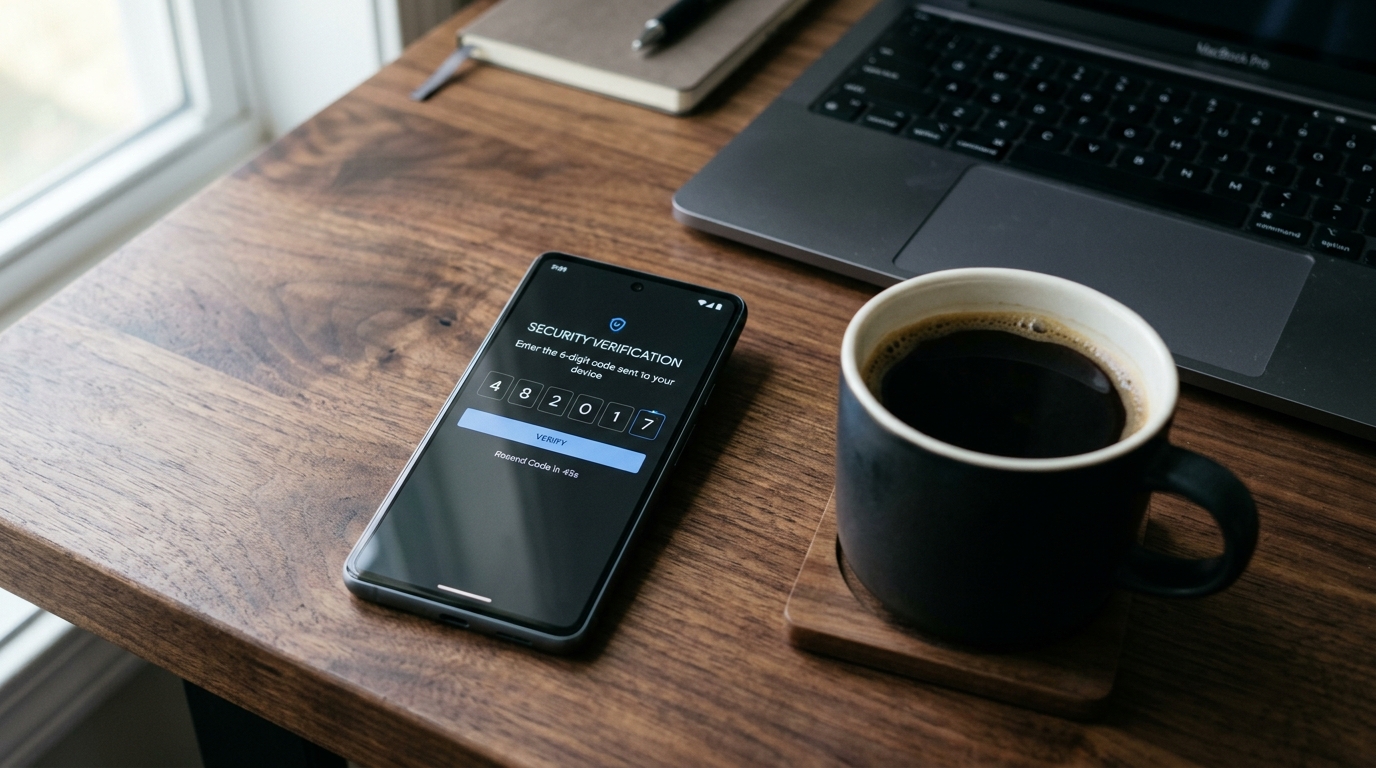
The solution is strict identity isolation. This is the exact outcome we built Receive SMS&Temp Mail: CodeApp to deliver. CodeApp serves as a buffer between your permanent identity and the services demanding your data.
Instead of exposing your real number when signing up for platforms like WhatsApp, Instagram, or local transit applications while traveling, you utilize CodeApp to receive temporary SMS verification codes and route confirmation emails through a disposable inbox. The service provider gets the verification they require, but they never touch your actual phone number or permanent inbox. My colleague Ece Sönmez recently detailed the technical mechanics of this process in her guide on the separation of hardware and identity during device upgrades, which I highly recommend for users managing multiple physical devices.
Encrypt Your Traffic Across Vulnerable Networks
Protecting your account registration is only the first phase of mobile security. The second phase involves securing the actual data packets leaving your device. Your cellular provider sees every domain you query.
Many users assume their cellular connections are inherently secure. But whether you are utilizing a major network like T-Mobile or a regional operator like Xfinity Mobile, your internet service provider logs your DNS requests. They know exactly which servers you communicate with, when you connect, and how much data you transfer. This metadata is frequently packaged and sold to third-party data brokers.

To neutralize this network-level surveillance, we maintain VPN 111: Warp IP DNS Changer. This utility does not try to be a password manager or an antivirus scanner; its sole function is to obfuscate your network traffic and prevent DNS hijacking.
VPN 111 functions by routing your connection through secure, encrypted servers distributed globally. When activated, it masks your physical IP address and aggressively overrides default ISP tracking. Furthermore, the built-in DNS changer allows you to bypass localized censorship and restrict malicious ad-tracking servers at the network level. If you are sitting in a coffee shop checking your bank balance on an iPhone 14, or jumping between public Wi-Fi access points, VPN 111 ensures that the network administrator sees nothing but randomized, encrypted noise.
Reject the "Everything App" Fallacy
A common counterargument I hear from industry peers is that expecting users to manage multiple specialized tools is unrealistic. Critics argue that modern consumers demand "frictionless" experiences, and that consolidating all privacy functions into a single dashboard is the only way to achieve mass adoption. They point to the rise of massive, multi-function platforms in Asia as proof that the "everything app" is inevitable.
I strongly disagree. While consolidation offers short-term convenience, it fundamentally breaks the core principle of digital security: compartmentalization. When a single application holds your VPN keys, your verification texts, your passwords, and your browsing history, it becomes an incredibly lucrative target for malicious actors.
Furthermore, monolithic applications inevitably suffer from feature bloat. They consume excessive battery life, demand sweeping operating system permissions, and degrade device performance. As Tuna Kılıç rightly pointed out in his analysis of why monolithic apps are failing modern privacy needs, consumer trust wanes when software demands access to your microphone and contacts just to filter your web traffic.
Specialized utilities respect the user's intelligence. By isolating our tools, we ensure that a user who only needs temporary SMS verification via CodeApp isn't forced to install VPN profiles they don't want. Conversely, a user who strictly needs VPN 111 to bypass regional throttling on their network provider isn't burdened with unnecessary messaging protocols.
Build a Deliberate Privacy Infrastructure
Establishing true digital privacy today requires moving away from default settings and convenient, all-in-one corporate ecosystems. It requires a deliberate, systematic approach to how you handle your data.
Start by auditing the tools currently installed on your mobile device. Ask yourself what core function each application serves, and what permissions it demands in return. If a simple flashlight utility requires network access, or if a free network tool demands your physical location, delete it immediately.
Next, compartmentalize your risk. Never use your permanent cellular number for initial account registrations or untrusted platforms. Utilize a dedicated verification tool like CodeApp to construct a verifiable, yet disposable, perimeter around your real identity.
Finally, treat every network connection as hostile. It does not matter if you are paying premium rates for a tier-one cellular provider; your metadata is being logged. Enforce encryption by default using a dedicated routing tool like VPN 111, ensuring your DNS queries remain entirely unreadable to your provider.
At Verity, our portfolio will continue to reflect these principles. We are committed to building utilities that perform their designated functions with absolute transparency, allowing you to regain control over your hardware, your identity, and your network.