 Verity
Most modern software isn't built to solve your problems; it's built to harvest your behavioral data. We are living through an era where applications are overwhelmingly bloated, aggressively tracking your movements, and demanding access to personal information they simply do not need to function. At Verity, we operate as a specialized mobile app company focused on developing distinct, high-performance privacy utilities rather than monolithic ecosystems. Our core mission is to restore user agency through focused tools that prioritize ad-blocking, network encryption, and temporary identity isolation.
My background is in frontend architecture and web performance optimization. For years, I've watched development teams cram unnecessary features into otherwise simple tools, destroying battery life and compromising security in the process. When I look at the state of mobile infrastructure today, I see an environment suffering from a severe crisis of trust. People are tired of their tools spying on them, and they are tired of paying with their privacy for basic utility.
The Trust Gap and the End of Monolithic Software
I’ve observed a growing friction between what tech vendors push and what users actually want. Look at Salsify’s 2026 Consumer Research Report—they identified a massive "AI Trust Gap." While roughly 22% of shoppers might experiment with automated search tools, a mere 14% actually trust AI recommendations alone to make purchasing decisions. Consumers are highly skeptical of black-box systems that claim to do everything.
Furthermore, Deloitte’s Tech Trends 2026 report highlights a critical operational reality: the "knowledge half-life in AI has shrunk to months from years." In an environment where the underlying technology shifts this rapidly, building a massive "everything app" is an engineering liability. When one component breaks or becomes outdated, the entire ecosystem suffers.
This is why our philosophy at Verity explicitly rejects the monolithic model. As my colleague Aslı Çevik recently outlined in her introduction to our broader mission, we are dedicated to practical privacy. We build modular, specialized apps. Each tool is designed to solve one specific problem flawlessly, with 0 bloat and absolute respect for system resources.
Hardware Longevity and Performance Constraints
The need for lightweight, specialized applications is also driven by macroeconomics. According to a 2026 Harvard Business School analysis, recent tariff increases have pushed up the retail prices of imported goods by about 5.4%, keeping inflation stubbornly close to 3%. Because premium hardware is increasingly expensive, consumers are extending the lifecycles of their existing devices.
In my daily performance testing, I am not just optimizing for the newest hardware. While some users are running the flagship iPhone 14 Pro, a massive segment of the market is actively maintaining the iPhone 11, the standard iPhone 14, or the larger iPhone 14 Plus. Heavy, data-hungry applications drain the batteries and choke the memory of older chipsets.
As a frontend engineer, my priority is ensuring that our applications run smoothly across this highly fragmented hardware ecosystem. Whether you are launching a VPN on a five-year-old device or generating a temporary email on the latest flagship, the execution must be instantaneous. We achieve this by stripping out heavy tracking SDKs, relying on native system APIs wherever possible, and isolating our core functionalities into standalone utilities.
Isolating Your Network from Your Carrier
Network environments are just as fragmented as hardware. Whether you’re relying on a major cellular provider like T-Mobile or utilizing a bundled ISP service like Xfinity Mobile, your carrier fundamentally controls the pipes through which your data flows. By default, these providers log your DNS requests, which means they can see every website you visit, every app you open, and every server you ping.
To reclaim control over this layer, users need network-level protection. This is where VPN 111: Warp IP DNS Changer comes into play.
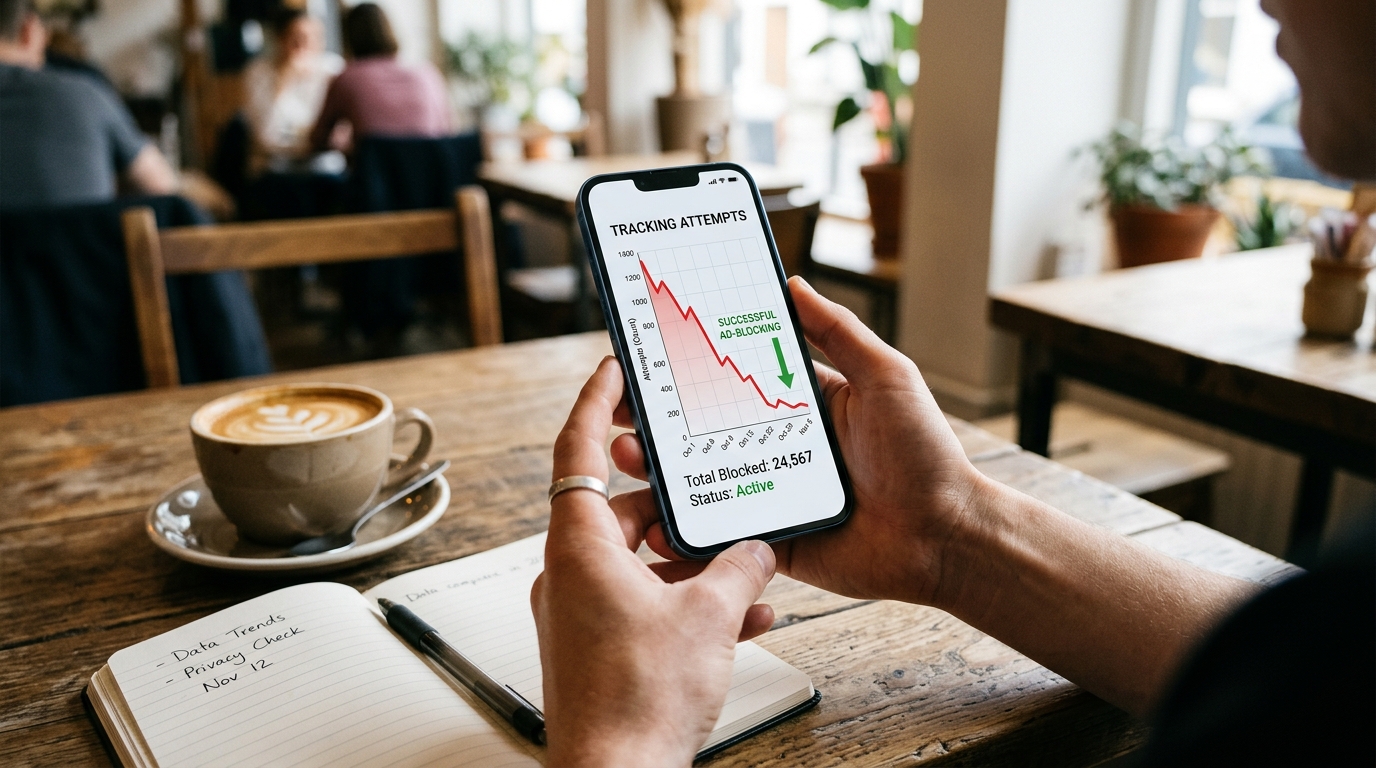
From an architectural perspective, VPN 111 isn't just about masking your IP address—it's a comprehensive DNS modification and ad-blocking utility. By routing your DNS requests through encrypted tunnels, it prevents your local ISP from compiling a profile of your browsing habits. More importantly, the integrated ad-blocking drops connections to known tracking servers before they even load. This doesn't just protect your privacy; it measurably improves web performance by reducing the amount of junk data your phone has to download and render over a cellular connection.
The Necessity of Identity Verification Proxies
If VPN 111 secures the network layer, we also need a solution for the application layer—specifically, the point of entry. Almost every digital service today demands a phone number or an email address to create an account. Providing your permanent contact information links your offline identity to your online behavior permanently.
When I analyze database structures, the danger is obvious. If you give your real phone number to a local restaurant's loyalty app, and that app suffers a data breach, your primary identifier is now circulating on the dark web. We need systems that act as identity proxies.
To address this, our portfolio includes Receive SMS&Temp Mail: CodeApp. Instead of exposing your permanent credentials, CodeApp allows you to generate a temporary email or access shared numbers to receive SMS verification codes. Whether you are testing a new software service, registering for an online forum, or signing up for a one-time discount, you can authenticate the account without adding your personal number to a marketing database.
This separation of verification from personal identity is critical. I've written extensively about this philosophy before, particularly when debunking the myth of the 'Everything App'. When you decouple your verification methods from your physical SIM card, you instantly reduce your vulnerability to phishing attacks and automated spam.

A Framework for Evaluating Utility Apps
This engineering approach is specifically designed for privacy-conscious consumers, traveling professionals, and anyone exhausted by the surveillance economy. When deciding what utilities deserve space on your device, I recommend applying a strict evaluation framework based on architectural principles:
- Does the app solve a specific problem, or does it try to do everything? Single-purpose apps generally feature cleaner codebases and fewer vulnerabilities.
- Does the app require permissions unrelated to its function? A DNS changer does not need access to your camera. A temporary mail client does not need your precise GPS location.
- How does it impact system performance? Check your device's battery and memory logs. Well-engineered utilities should barely register on your system monitor.
Practical Q&A on Mobile Utility Deployment
I frequently receive questions from users regarding the technical deployment of our tools. Here are a few practical answers based on real-world scenarios.
Should I keep my VPN active constantly, or only on public Wi-Fi?
In my experience, you should maintain active DNS encryption even on cellular networks. Carriers monetize your browsing data. Running an efficient utility like VPN 111 on cellular connections prevents this profiling with minimal battery overhead.
Can I use temporary numbers for my banking apps?
No. Temporary SMS services are designed for low-stakes verifications—like retail accounts, social forums, or newsletter sign-ups. Your primary banking or government services should always be tied to a permanent, secured credential.
Why does my phone seem faster when I change my DNS?
Because a high-quality DNS changer with ad-blocking (like VPN 111) intercepts requests to telemetry servers at the network level. Your browser doesn't have to download, parse, and execute heavy tracking scripts, resulting in faster rendering times and reduced data usage.
Looking Forward: Performance as Privacy
As we move through 2026, the intersection of performance and privacy will only become more critical. The economic realities dictate that we will hold onto our hardware longer, while the sheer volume of data harvesting requires us to be more vigilant about our network connections and identity verification.
At Verity, we are committed to building the digital equivalent of reliable hand tools. We don't want to capture your attention for hours on end, and we don't want to track your behavior across the web. We want to provide you with the exact utility you need—whether that's a temporary inbox to catch a verification code, or a secure tunnel to bypass a carrier's tracking—and then get out of your way.